Scythe by Neal Shusterman
My rating: 5 of 5 stars
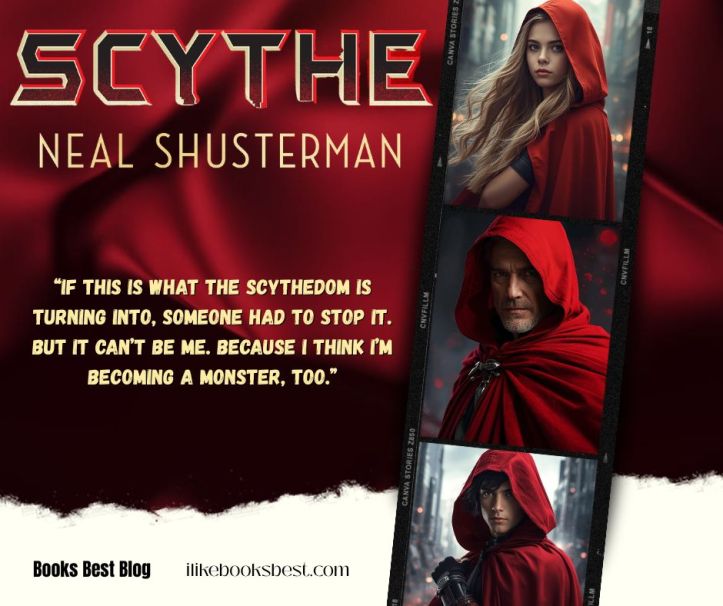
A world with no hunger, no disease, no war, no misery. Humanity has conquered all those things, and has even conquered death. Now scythes are the only ones who can end life—and they are commanded to do so, in order to keep the size of the population under control.
Citra and Rowan are chosen to apprentice to a scythe—a role that neither wants. These teens must master the “art” of taking life, knowing that the consequence of failure could mean losing their own.
Ethics at the Edge of Immortality
The following ratings are out of 5:
Story/Plot: 📕📗📘📙📔
World building: 🌏🌍🌎🌍🌏
Character development: 🤓😟🤯😎
Narration: 🎙🎙🎙🎙🎙
Narration Type: Solo Narration
Characters and Plot Dynamics
Scythe introduces Citra Terranova and Rowan Damisch, two teens chosen to apprentice under a Scythe in a future where humanity has eliminated natural death. Society is guided by the Thunderhead, an advanced artificial intelligence that maintains order. Since no one dies on their own anymore, Scythes are responsible for population control through permanent death, known as gleaning. They are expected to act with fairness and compassion, yet they operate outside the Thunderhead’s authority, which leaves room for corruption.
The Apprenticeship
Citra and Rowan begin their training under Scythe Faraday, learning both the physical skills and the ethical foundations of gleaning. Their lessons cover history, philosophy, and the reasoning behind choosing who lives and who dies. The apprenticeship is competitive, and only one of them will ultimately earn the title of Scythe. This pressure forces them to confront their own values while navigating the politics and power struggles within the Scythedom.
Moral Questions
The role of a Scythe carries immense moral weight. Since they alone can end life permanently, every decision raises difficult questions about justice, bias, and responsibility. Some Scythes treat the role with solemn respect, while others become hardened or even take pleasure in their authority. The story explores how easily power can shift from duty to self-interest.
The Red Apprentices
As red apprentices, Citra and Rowan reach the final stage of their training. They encounter Scythes with very different philosophies, which forces them to consider what kind of Scythe they would become. They witness gleanings firsthand, make judgment calls without clear answers, and struggle to maintain their humanity in a system that often feels flawed. They learn that intention matters, but it cannot erase the consequences of their choices.
What They Discover
Through their experiences, both characters come to understand that empathy must guide power or it becomes dangerous. They see how even well-designed systems can be manipulated and realize that their personal choices define them more than the title they seek.
Strengths and Weaknesses
The novel’s strongest element is its premise. The idea of a world without natural death is explored with imagination and emotional depth. The ethical dilemmas are compelling and linger long after the story ends. Citra and Rowan’s development feels authentic, and the variety of Scythes they encounter adds richness to the narrative. The world-building unfolds gradually, which keeps the story engaging.
Some listeners may find the pacing slower during sections focused on training or philosophical reflection. These moments are important for the themes, but they can feel less dynamic than the action-driven scenes. A few moral conflicts may also seem straightforward depending on how you interpret the characters.
Narration
Greg Tremblay delivers a clear and expressive performance. He differentiates characters effectively without exaggeration and captures both the tension and introspection of the story. His pacing supports the emotional tone and enhances the overall experience.
Final Opinion
Scythe is a thoughtful and immersive audiobook that blends dystopian storytelling with meaningful ethical questions. Its unique exploration of mortality, power, and responsibility makes it a standout listen. Although the pacing slows at times, the strong concept, character growth, and moral complexity create a rewarding experience. Tremblay’s narration adds depth and keeps the story engaging from start to finish.
Quotes
“Therin lies the paradox of the profession,’ Faraday said. ‘Those who wish to have the job should not have it…and those who would most refuse to kill are the only ones who should.”
“I have become the monster of monsters, he thought as he watched it all burn. The butcher of lions. The executioner of eagles.”
“Perhaps that is why we must, by law, keep a record. A public journal, testifying to those who will never die and those who are yet to be born, as to why we human beings do the things we do. We are instructed to write down not just our deeds but our feelings, because it must be known that we do have feelings. Remorse. Regret. Sorrow too great to bear. Because if we didn’t feel those things, what monsters would we be?”
Blog|Goodreads|Facebook|Instagram|Pinterest|BookBub
View all my reviews

