The Extraordinary Life of Sam Hell by Robert Dugoni
My rating: 4 of 5 stars
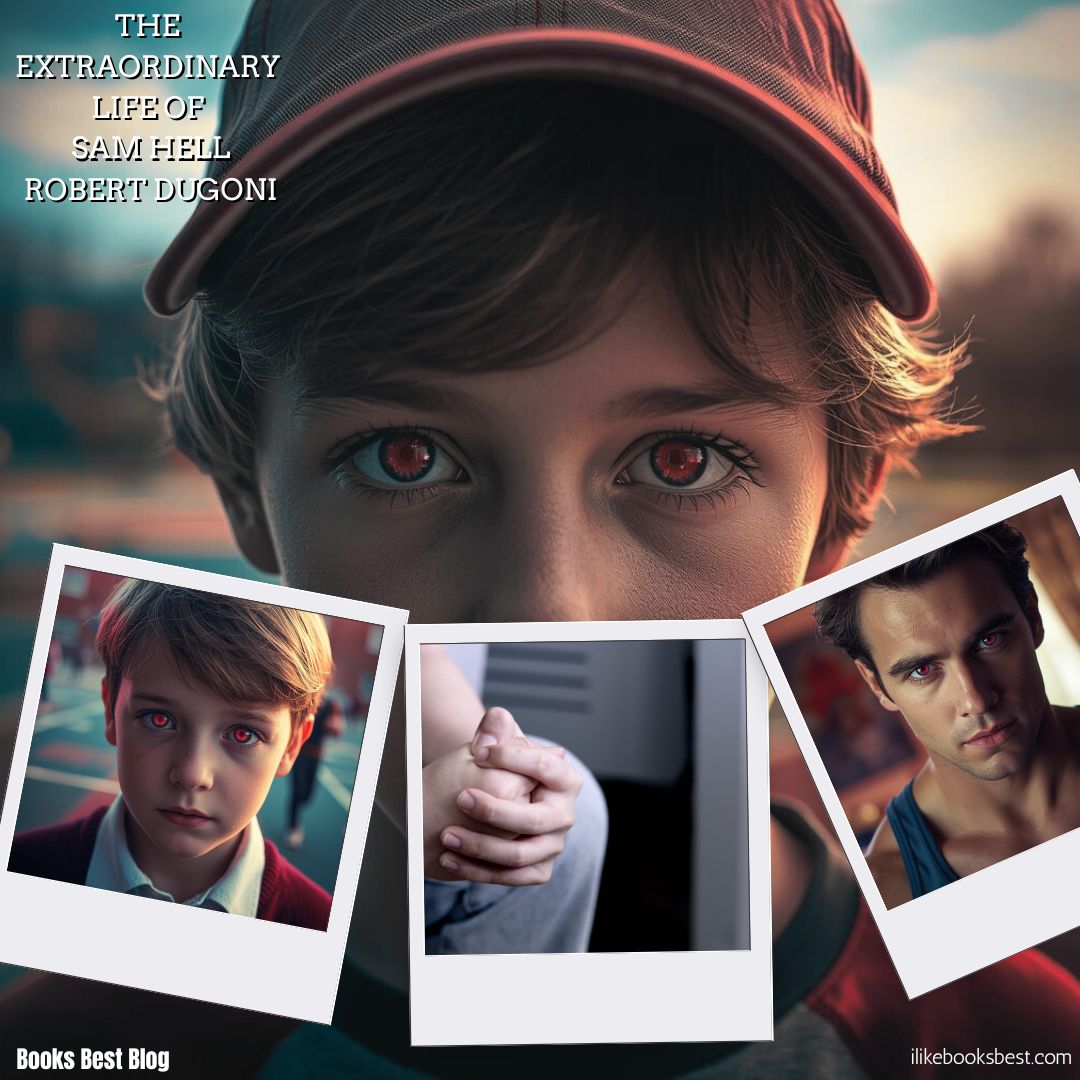
Sam Hill always saw the world through different eyes. Born with red pupils, he was called “Devil Boy” or Sam “Hell” by his classmates; “God’s will” is what his mother called his ocular albinism. Her words were of little comfort, but Sam persevered, buoyed by his mother’s devout faith, his father’s practical wisdom, and his two other misfit friends.
Sam believed it was God who sent Ernie Cantwell, the only African American kid in his class, to be the friend he so desperately needed. And that it was God’s idea for Mickie Kennedy to storm into Our Lady of Mercy like a tornado, uprooting every rule Sam had been taught about boys and girls.
Forty years later, Sam, a small-town eye doctor, is no longer certain anything was by design—especially not the tragedy that caused him to turn his back on his friends, his hometown, and the life he’d always known. Running from the pain, eyes closed, served little purpose. Now, as he looks back on his life, Sam embarks on a journey that will take him halfway around the world. This time, his eyes are wide open—bringing into clear view what changed him, defined him, and made him so afraid, until he can finally see what truly matters.
Seeing the World Through Sam’s Eyes
The following ratings are out of 5:
Story/Plot: 📕📗📘📙
World building: 🌏🌍🌎🌏🌍
Character development: 😎☺️😁😛🥰
Narration: 🎙🎙🎙
Narration Type: Solo Narration
🎧 Audiobook Review: The extraordinary life of Sam Hell
Author: Robert Dugoni
Genre: Historical Fiction
Narrator(s): Robert Dugoni
📚 Character Background & Plot Dynamics
The story opens with a brief but telling foreword: Sam, now an adult, reflects on his mother’s belief that his challenges were “God’s will,” a conviction he once resisted but eventually adopts as part of his worldview. That sense of predetermined fate shadows him into adulthood, where we first meet him in 1989—32 years old, sitting anxiously in a doctor’s office, about to get a vasectomy. He lives with Eva, a woman he cares for but isn’t married to, and the procedure is something he realizes he’s doing more for her than for himself. It’s a moment that sets the tone for Sam’s lifelong struggle between who he is and who others expect him to be.
Sam’s memories drift back to when his parents used to tell him about his birth, a month early and with his eyes shut tight. When he finally opened them, the hospital staff was stunned: his pupils were red. The diagnosis—ocular albinism—made him instantly different. His parents named him Sam Hill, and thanks to his father’s favorite expression, “What the sam hell,” he quickly became known as Sam Hell. His mother, a devout Catholic, believed his unusual eyes meant he was destined for an extraordinary life.
Determined to give him the best education, she insisted he attend the local Catholic school. When the principal refused—claiming Sam’s presence would “interfere” with the other children—his mother forced the issue, even getting the story on the news. The next day, Sam was admitted. It was his first real encounter with prejudice, but far from the last.
At school, Sam is initially ignored rather than bullied, though whispers of “devil boy” follow him. Everything changes when Ernie, the only Black student, befriends him. Their bond is immediate and genuine. But trouble arrives in the form of David Bateman, an older boy who has been held back and seems to relish tormenting both Sam and Ernie. When David attacks them, Ernie fights back, and Sam—despite his fear—jumps in to help. Sister Beatrice wrongly blames Sam, but Ernie’s honesty clears his name. It’s the beginning of a lifelong friendship forged in loyalty and shared hardship.
🌟 Strengths
• Sam becoming an ophthalmologist is a beautifully poetic full-circle moment. It’s the perfect profession for someone whose eyes shaped his entire life—though the fact that he hides them behind colored contacts adds a bittersweet layer.
• The book is a thoughtful study of childhood cruelty, showing how kids can weaponize anything—eye color, skin color, or simple difference—to wound each other.
• The supporting cast is richly drawn. Sam’s parents are warm and steadfast, Ernie is loyal and funny, Mickey is a wonderfully grounded tomboy presence, and David Bateman is a convincingly complex bully.
• Sam’s life is not defined by suffering, which is refreshing. He has real friendships, real joy, and a loving family, which keeps the story from becoming trauma for trauma’s sake.
• The inclusion of the 1989 World Series earthquake adds a vivid touch of real history that grounds the narrative.
• The dual timeline works surprisingly well. Even if you usually prefer linear storytelling, the toggling between past and present adds emotional depth and momentum.
💔 Limitations
• David Bateman’s home life is clearly abusive, and while it doesn’t excuse his behavior, it does briefly evoke sympathy. The moment his father hits him in front of adults—and even a priest—highlights how different the 1970s were in terms of discipline and social norms. But that sympathy fades quickly as David’s cruelty escalates.
🎙️ Narration
The audiobook is narrated by Robert Dugoni himself, and while he’s a competent reader, he isn’t a trained voice actor. For an author with such an extensive catalog and strong reputation, it’s surprising he didn’t bring in a professional narrator who could elevate the emotional nuances of the story. Dugoni’s delivery is steady and serviceable, and after a while it becomes easy enough to settle into, especially with immersive reading. Still, the performance lacks the vocal texture and character distinction that seasoned audiobook listeners often crave.
💬 Final Assessment
The Extraordinary Life of Sam Hell is a heartfelt, emotionally resonant coming‑of‑age story that blends faith, prejudice, friendship, and identity into a narrative that feels both intimate and universal. Sam’s journey is compelling not because of the hardships he faces, but because of the resilience, humor, and love that surround him. The characters are memorable, the themes are thoughtfully explored, and the dual timeline structure enriches the story rather than complicating it.
While the narration doesn’t fully capture the emotional depth of the novel, the strength of the writing more than compensates. This is a story that lingers—quietly powerful, deeply human, and ultimately uplifting. It’s a book that reminds you how much the people who stand by you shape the person you become.
💭 Quotes
“There came a point when we all realized we weren’t going to walk on the moon, star in a Hollywood movie, or be president of the United States. We’d be who we were, and we could either come to grips with this fact and like the person we’d become or live with regret and disappointment. My reality was that I was not going to live some extraordinary life, as my mother so fervently believed, and prayed for.
Life’s a bitch kid and then you die.”
Blog|Goodreads|Facebook|Instagram|Pinterest|BookBub
View all my reviews
 Books Best Blog