The Only Good Indians by Stephen Graham Jones
My rating: 4 of 5 stars
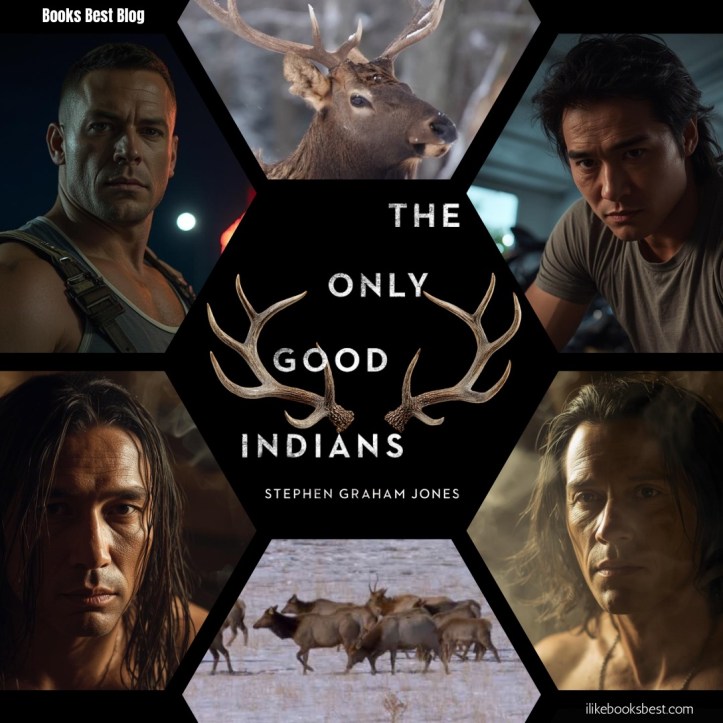
Seamlessly blending classic horror and a dramatic narrative with sharp social commentary, The Only Good Indians follows four American Indian men after a disturbing event from their youth puts them in a desperate struggle for their lives. Tracked by an entity bent on revenge, these childhood friends are helpless as the culture and traditions they left behind catch up to them in a violent, vengeful way.
A Modern Native Horror with Heart and Flaws
The following ratings are out of 5:
Story/Plot: 📕📗📘📙
World building: 🌏🌍🌏🌎🌍
Character development: 😋🙂😁
Narrator(s): 🎙🎙🎙
Narration type: Solo Narration
👫🏻 Character Background and Plot Dynamics
The story opens in Williston, North Dakota, where Ricky “Boss” Ribbs has tried to rebuild his life after leaving the reservation in Browning, Montana. Haunted by his brother Cheeto’s overdose and carrying more grief than he admits, Ricky joins a drilling crew as a grunt. The men call him Chief and give him the most dangerous tasks. He plans to leave for Minneapolis after his first paycheck, a detail he keeps to himself.
Ricky once shared a tight bond with Gabe, Lewis, and Cass back on the reservation. A year earlier, the four friends had gone hunting before Thanksgiving with the intention of feeding their community. A snowstorm hit, everything went wrong, and the consequences of that day have followed them ever since.
Now, Ricky sits alone in a roughneck bar in North Dakota. When he steps outside to relieve himself, he senses he is not alone. At first, he assumes it is a group of white men angry that he had been looking at a white woman. Instead, he witnesses an elk slamming into vehicles, setting off alarms and creating chaos. When the roughnecks rush outside, all they see is Ricky holding a wrench and a parking lot full of wrecked trucks. They assume he snapped and chase him into the prairie, where a herd of elk blocks his escape. Ricky dies that night.
Nine years later, Lewis and his wife Peta have built a life far from the reservation. Lewis works as a mailman and believes he has avoided the pitfalls that plague many in his community. While fixing a spotlight near a moving ceiling fan, he glimpses what looks like the dead cow elk from that long ago hunt. When it blinks, he panics and falls, only surviving because Peta arrives in time to push him out of danger.
Shaken, Lewis calls Cass and Gabe, who still live on the reservation. The ten year anniversary of the event they all try not to think about is approaching. They had been hunting elk, and they did something they were not supposed to do, something against the laws of their tribe. They now call themselves the four butchers of Duck Lake (well, three now). Duck lake was in a place they weren’t supposed to go without the elders and Gabe says the place is now haunted and elk don’t even go there anymore.
🌟 Strengths
• The early chapters keep the reader guessing. The uncertainty about whether the threat is supernatural, psychological, or rooted in guilt creates a compelling tension.
• The unpredictability of the plot works well. Lewis’s spiraling paranoia and the sudden bursts of horror and gore caught me off guard in the best way.
• The novel blends horror with cultural depth. Themes of guilt, identity, and the consequences of breaking tradition give the story emotional weight.
• The representation of contemporary Native American life feels grounded and authentic. The book explores the push and pull between tradition and modern life in a way that is rarely seen in mainstream horror.
• The descriptive writing, atmospheric world building, and character development all contribute to a vivid sense of place that supports the horror elements effectively.
💔 Limitations
• The pacing drags at times, especially before the horror fully takes shape. Some readers may appreciate the slow burn, but others may find it more frustrating than suspenseful.
• Although the imagery is disturbing and the ideas are strong, the tension does not always build into sustained fear and at times, I had trouble figuring out exactly what was happening during the high-tension scenes.
• I recently read The Buffalo Hunter Hunter by Stephen Graham Jones and found that story more original and more emotionally resonant. While this book has strong cultural themes and an interesting premise, it did not reach the same level of impact for me.
🎙 Narration
The audiobook is performed by Shaun Taylor Corbett in a solo narration with multiple points of view. His voice did not fully work for me, although it was not unpleasant. I tend to prefer deeper male voices. He does capture the reservation accent well, which adds authenticity, but his character differentiation is limited and sometimes blends together.
💭 Final Assessment
This story has a powerful cultural foundation, strong atmosphere, and moments of genuine unpredictability. I appreciated the themes of guilt, tradition, and identity, as well as the focus on modern Native American life. However, the pacing issues, uneven tension, and narration that did not quite land for me kept the experience from reaching its full potential. I am glad I read it, but it did not rise to the level of my favorite works by this author.
Blog|Goodreads|Facebook|Instagram|Twitter|BookBub
View all my reviews
 Books Best Blog