The Buffalo Hunter Hunter by Stephen Graham Jones
My rating: 5 of 5 stars
In 1912 a strange confession is given, over several nights, to a Lutheran priest who transcribes the life of a vampire who haunted the fields of the Blackfeet reservation, looking for justice.
A diary, written in 1912 by a Lutheran Pastor is discovered within a wall and what it unveils is a slow massacre, a chain of events that go back to two hundred and seventeen Blackfeet dead in the snow. Told in transcribed confessions by a Blackfeet named Good Stab, who shared the narrative of his peculiar life over a series of confessional visits, this is a bloody history of the American West that has remained untold until now.
Buffalo Ghosts and Frontier Nightmares
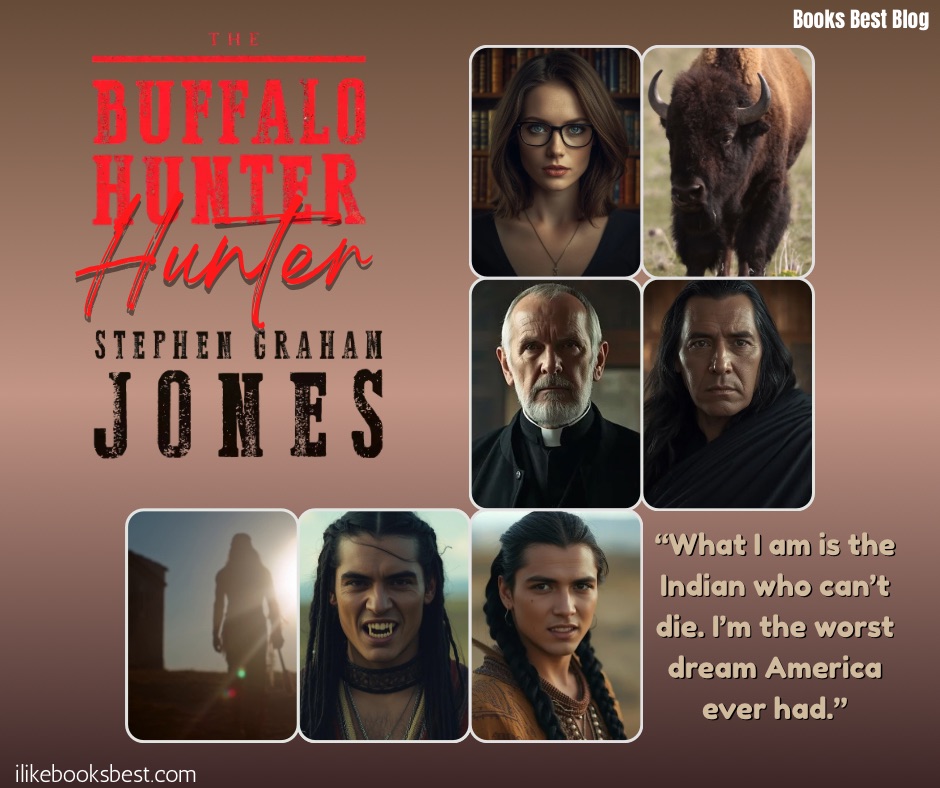
The following ratings are out of 5:
Story/Plot: 📕📗📙📘📔
World building: 🌏🌍🌎🌏🌍
Character development: 😋😀😎😁🫣
Narration: 🎙🎙🎙🎙🎙
Narration Type: Duet Narration
🎧 Audiobook Review: The Buffalo Hunter Hunter
Author: Stephen Graham Jones
Genre: Historical Fiction
Narrator(s): Shane Ghostkeeper, Marin Ireland and Owen Teale
🎬 Character Background & Plot Dynamics
The story begins in 2012, when a construction worker uncovers a century‑old journal hidden behind a wall in a parsonage. The journal belonged to Arthur Beaucarne, a Lutheran pastor who mysteriously vanished in 1912. His descendant, Etsy Beaucarne—a communications and journalism day worker struggling to secure tenure—receives the journal and sees in it both a family mystery and a professional lifeline. Determined to preserve the deteriorating artifact, she decides to study it and write a book that might finally solidify her academic standing.
As Etsy reads, she becomes increasingly captivated by Arthur’s voice and the world he describes. She even begins keeping her own journal, mirroring his reflections. Arthur’s entries open with the discovery of a mutilated body outside town, sparking fears of renewed conflict with local tribes or echoes of older, brutal events from the region’s past. Against this tense backdrop, Arthur meets Good Stab, a Blackfoot man who has been quietly attending his services. Their conversations—especially the story Good Stab entrusts to him—become the heart of the journal and the novel’s most compelling thread.
🌟 What Worked for Me
• The dual‑timeline structure
The “story within a story” format is incredibly effective. Etsy’s modern academic pressures contrast beautifully with Arthur’s early‑20th‑century world, and the mystery of his disappearance adds a steady undercurrent of tension.
• Good Stab’s confessional narrative
His recounting of his experiences gave me Interview with the Vampire vibes—intimate, unsettling, and tinged with tragedy. The lore has unique cultural twists that complicate his identity and moral choices without ever feeling gimmicky.
• Ambiguity around the supernatural
I loved that Arthur initially questions whether Good Stab’s experiences are trauma-induced hallucinations or something more. That uncertainty grounds the story and keeps the reader leaning in.
• Historical and cultural layering
The blend of frontier history, Indigenous perspectives, and speculative horror is powerful. The novel doesn’t shy away from the brutality inflicted on Native peoples, and that context makes Good Stab’s motivations and suffering deeply resonant.
• Good Stab as a sympathetic figure
His bond with the buffalo—especially the albino one—adds emotional depth. His anger toward the white hunters feels justified, and even when his actions cross lines, the story never loses sight of his humanity.
• Authentic language details
The Blackfeet vocabulary sprinkled throughout added richness. I found myself looking up words, and each one made the world feel more lived-in.
• Pacing surprises
Several times I thought the story was winding down, only to discover there were hours left—and each new turn pulled me in deeper. The ending veers into wild territory, but at least it avoids predictability.
• A complex, memorable character
Despite everything he does, I genuinely liked Good Stab. His internal conflict and cultural displacement make him one of the most compelling characters I’ve encountered in a while.
⤵️ What Didn’t Work as Well
• Going in with too much foreknowledge
I regret reading reviews beforehand. This is a story best experienced with no expectations, and I wish I’d had the chance to discover its twists organically.
• Occasional awkwardness in Good Stab’s narration
At times he describes gestures he’s making while telling his story, which doesn’t translate well to an audio format. Those moments briefly pulled me out of the immersion.
🎙️ Narration
The audiobook uses a duet-style, multi‑POV approach with narrators Shane Ghostkeeper, Marin Ireland, and Owen Teale—and the performances are exceptional.
• Marin Ireland captures Etsy’s grounded, pragmatic voice perfectly, giving her a tone that feels both academic and emotionally accessible.
• Owen Teale embodies Arthur with a refined, slightly old‑world cadence that feels authentically Edwardian—almost Anthony Hopkins–esque.
• Shane Ghostkeeper delivers a standout performance as Good Stab, bringing nuance, dignity, and emotional weight to a character who could easily have been flattened in lesser hands.
The narration elevates the entire experience.
💬 Final Thoughts & Assessment
This audiobook blends historical fiction, Indigenous storytelling, and supernatural horror into something genuinely distinctive. The dual timelines enrich each other, the moral complexity runs deep, and Good Stab’s story lingers long after the final chapter. While a few narrative quirks and my own pre-reading of reviews slightly dulled the impact, the overall experience was gripping, atmospheric, and emotionally layered. The narration is superb, and the story’s cultural and historical textures make it stand out in a crowded genre.
A compelling, haunting listen—well worth diving into, especially if you enjoy character-driven horror with historical depth.
💭 Quotes
“I’m the one who has to drink the blood of my people, just so I can keep drinking that blood.”
“We never called this place ours like that, though, but that didn’t mean it was yours.”
“You Black Robes know about drinking blood, don’t you? You make your people in these wooded seats do it every time they’re here.
In that way we’re the same.”
“I would like them to think that the black horns they shot were turning around and coming for them now.”
“This I believe is the story of America, told in a forgotten church in the hinterlands with a choir of the dead mutely listening.”
“You wanted to make us cry. And so you did. You wanted our land, so you took it. You wanted us out of the way, so you killed us in our lodges. Is there more to it, Three-Persons?”
“You can’t stop a country from happening, Good Stab.”
“But we were already a nation,” he said up to me. “We didn’t ask you to come.”
Blog|Goodreads|Facebook|Instagram|Pinterest|BookBub
View all my reviews
 Books Best Blog